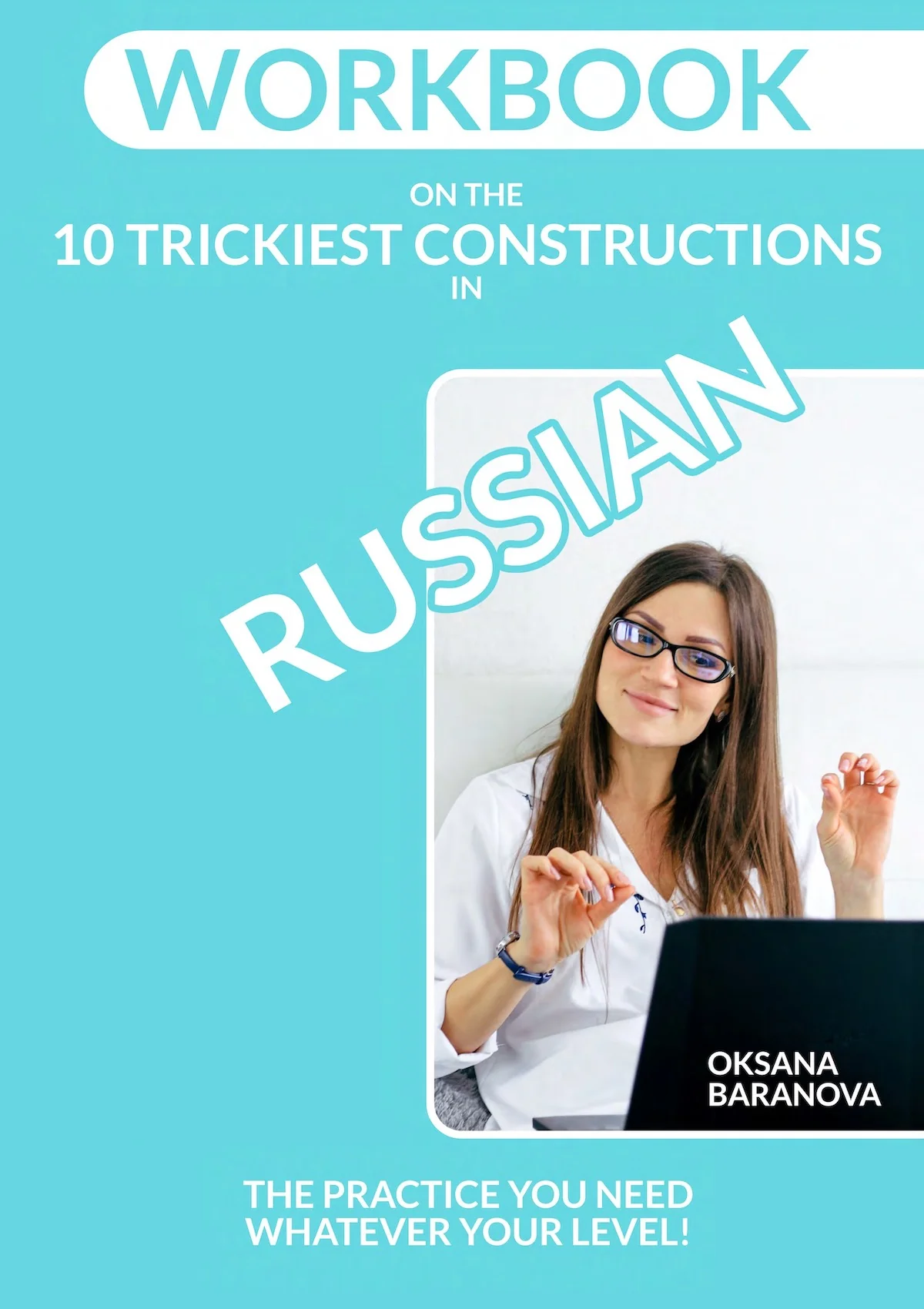
Workbook on the 10 Trickiest Constructions in Russian
The idea for this workbook came after ten years of teaching Russian. The constructions presented here are ones that learners encounter from the very first level of speaking Russian, yet even upper-intermediate students often continue to make mistakes with them. These constructions are called “tricky” because they differ greatly from the patterns used in English or Romance languages, which makes them harder to remember.
The goal of this workbook is not to provide exhaustive grammatical explanations, but to draw learners’ attention to these constructions and help them practice using them. Key points for each topic are presented in simple charts and tables with short notes. If you feel the need to study a topic in greater depth, each chapter includes Russian and English keywords you can search for online or look up in other grammar references.
Some exercises may at first seem difficult to understand. In certain cases, longer context is provided so you can grasp the nuance and proper usage of the construction. Don’t worry—the task will become clearer once you review the model sentences and begin the exercises.
I hope this workbook helps you become more attentive when speaking Russian, notice the moments when these constructions are needed, and use them naturally. Doing so will make your speech richer and closer to that of native speakers.
— Oksana Baranova
The idea for this workbook came after ten years of teaching Russian. The constructions presented here are ones that learners encounter from the very first level of speaking Russian, yet even upper-intermediate students often continue to make mistakes with them. These constructions are called “tricky” because they differ greatly from the patterns used in English or Romance languages, which makes them harder to remember.
The goal of this workbook is not to provide exhaustive grammatical explanations, but to draw learners’ attention to these constructions and help them practice using them. Key points for each topic are presented in simple charts and tables with short notes. If you feel the need to study a topic in greater depth, each chapter includes Russian and English keywords you can search for online or look up in other grammar references.
Some exercises may at first seem difficult to understand. In certain cases, longer context is provided so you can grasp the nuance and proper usage of the construction. Don’t worry—the task will become clearer once you review the model sentences and begin the exercises.
I hope this workbook helps you become more attentive when speaking Russian, notice the moments when these constructions are needed, and use them naturally. Doing so will make your speech richer and closer to that of native speakers.
— Oksana Baranova
Description
The idea for this workbook came after ten years of teaching Russian. The constructions presented here are ones that learners encounter from the very first level of speaking Russian, yet even upper-intermediate students often continue to make mistakes with them. These constructions are called “tricky” because they differ greatly from the patterns used in English or Romance languages, which makes them harder to remember.
The goal of this workbook is not to provide exhaustive grammatical explanations, but to draw learners’ attention to these constructions and help them practice using them. Key points for each topic are presented in simple charts and tables with short notes. If you feel the need to study a topic in greater depth, each chapter includes Russian and English keywords you can search for online or look up in other grammar references.
Some exercises may at first seem difficult to understand. In certain cases, longer context is provided so you can grasp the nuance and proper usage of the construction. Don’t worry—the task will become clearer once you review the model sentences and begin the exercises.
I hope this workbook helps you become more attentive when speaking Russian, notice the moments when these constructions are needed, and use them naturally. Doing so will make your speech richer and closer to that of native speakers.
— Oksana Baranova